By Thomas Bainbridge
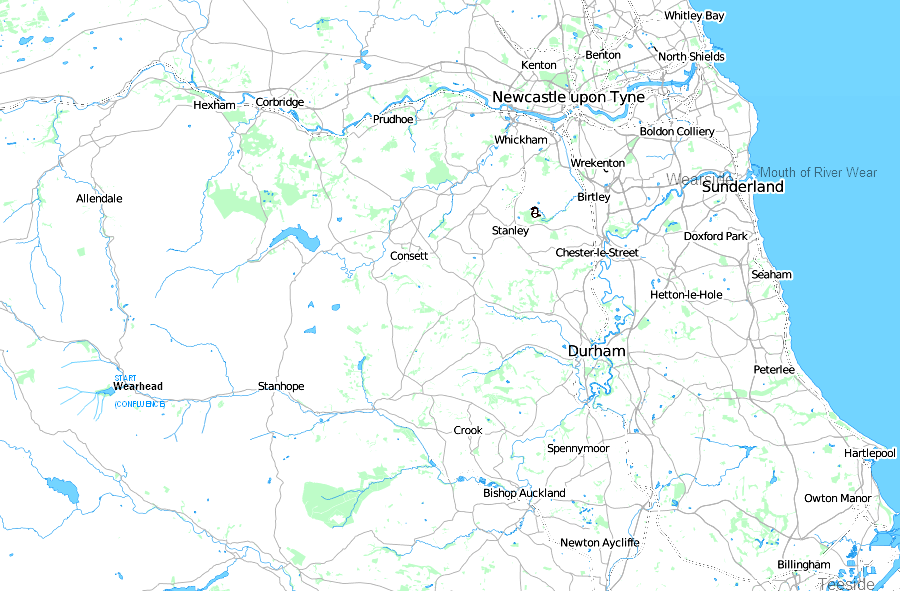
The Wear, from its source below the granite gaze of the Pennines, flows languidly to the east and north for sixty miles, watering the lands of County Durham before emptying into the sea at Sunderland.
On its course, the Wear is bolstered by an inestimable number of streams as it wends through some of the greenest and most pleasant stretches in England, along ancient cities, and through sleepy, idyllic villages.
Understanding the Name
With the lilt of the County Durham accent, the word ‘Wear’ is imbued with romance. Seen through the mists of time or the verses of Walter Scott, it conjures up images of saintly virtues and Viking incursions.
Monkwearmouth was the site of Bede’s birth and much of his scholarship, which was recognised throughout Christendom.
Perhaps the word Wear is of Anglo-Saxon origin, then? But no, it is older and still more ancient. In fact, it is the oldest word we have for the most basic necessity of life: water.
Ancient Discovery
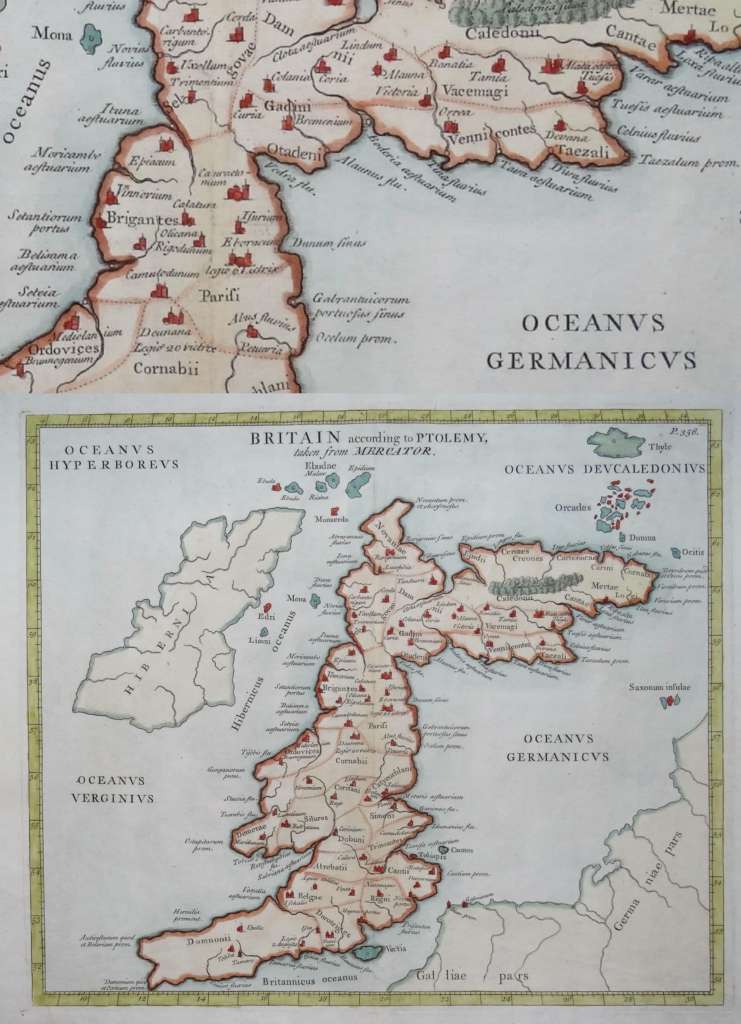
The Greco-Roman mathematician and astrologer, Ptolemy, writing in the 2nd century AD, included mention of a river named Vedra on the east coast of Britian, then called Albion.
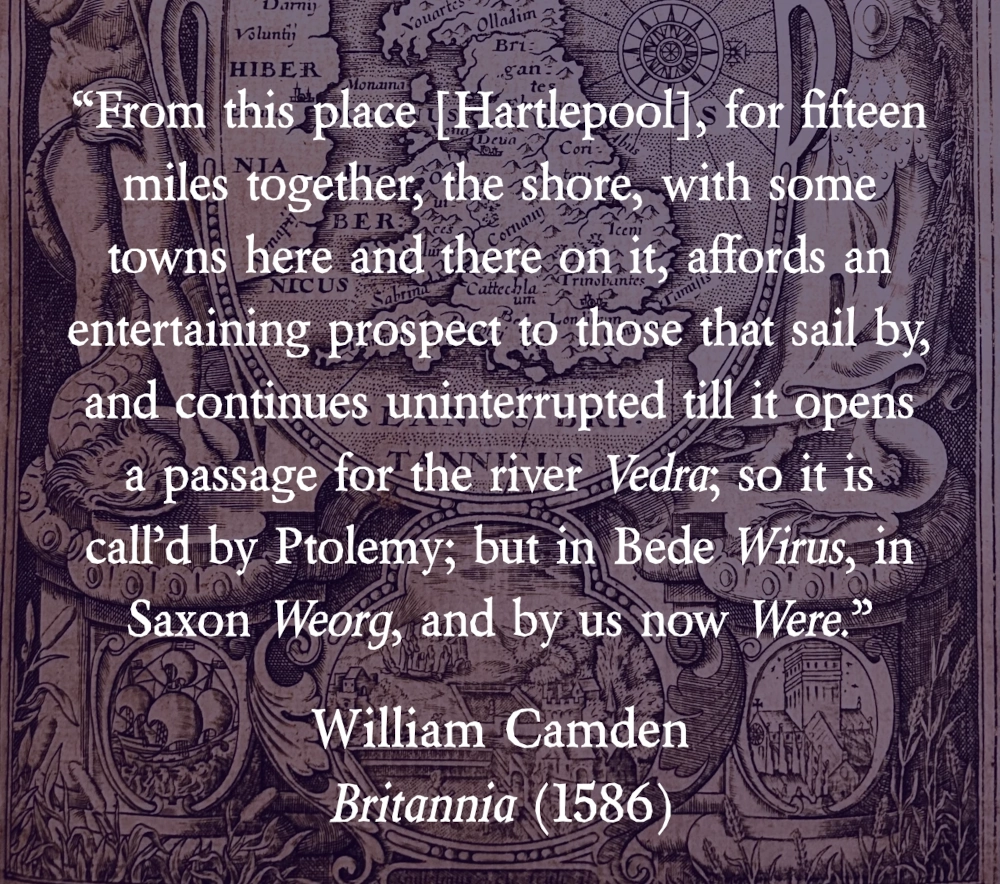
Vedra is probably a Latinisation of the Brittonic name, most likely Wedra or Oudra, deriving from the proto-Indo European wed, simply meaning ‘water’.
Of course, it seems rather obvious to call a river by what it is composed from. The Vistula that cuts through Krakow, and the Wesser around which Bremen is built, also originate from wed.
From wed, the term altered to become wei, in Celtic, meaning to flow.
Still, an alternative explanation is that the name derives from the Brittonic word wejr, meaning curved or bendy (though this too derives from wed). Gwair still means ‘bend’ in Welsh.
Bede’s World
By the 7th century, five hundred years after Ptolemy, Bede, writing in Latin, dubbed the river Wiri fluminis which can be interpreted as the River ‘Water’.
He claimed that Aidan granted Hilda a dwelling in the district north of the river, transmuted into Old English as the Wire, or Ware, from which ‘Wear’ has developed.
Deeper Meanings
Wed, being such a fundamental word, has produced numerous related terms. We have noted wejr, and wei, but there are cognates in other languages.
In Russian, Vidra means ‘otter’. Interestingly, Bede includes descriptions of otters in his Life of Saint Cuthbert, dubbing them water-dogs.
The word ‘weir’, meaning a dam or river defence, or a trap for fish, shares the Old English wer root. Whilewehr meaning ‘defense’ in German is a cognate.
As explained in a previous Penbal post, the Tyne shares a similar etymology to the Wear, where teh also meant to flow, or perhaps more accurately to melt in Brittonic. Compared with other etymologies such as that of the Thames, we should perhaps be thankful, as this is said to come from tamesas, or ‘darkness’, due to the murkiness of its water. In contrast, wed implies clarity. For instance, vitrum, meaning ‘glass’ in Latin derives from wed due to its transparency.
River names provide the oldest words in a language, and the Wear is no exception. Its current form comes to us from Old English, but we know the name is even older than that, all because of an enigmatic label on Ptolemy’s ancient map of Britain.