By Thomas Bainbridge
The Australian story, paid for so dearly amidst the burning sand and scrub of the Gallipoli peninsula, was written by a small band of heroes who fought and died to christen their new nation in blood.
But one such man who braved enemy bullets in defence of the land of his adoption, and who would go on to be an Aussie hero, was a lad from Tyneside.
John ‘Jack’ Simpson Kirkpatrick was born in 1892 in South Shields to Scottish parents. As a boy he lived at 10 South Eldon Street, and later 14 Bertram Street, growing up during the height of the imperial might of Great Britain. Across the globe, the British Empire stretched through vast regions, across oceans, encompassing hundreds of millions of people varying from French Canadians to Indian Rajas. Colonies which had initially been devoted to the likes of trade, agriculture and, in the case of Australia, penal servitude had slowly grown in energy and size to be on par and even surpass the towns and cities of England herself, populated primarily by men and women of British and Irish stock who had went in search of wider horizons and opportunities.
Leaving Shields
Kirkpatrick followed this well-trodden path. At 16, he took up an adventurous life on the high-seas. He travelled to the far side of the world as a stoker on the SS Yeddo, seeking his destiny. In Newcastle, a name familiar to his ears, he found his berth. He jumped ship and wandered throughout New South Wales and Queensland, working at whichever jobs he could find. He then travelled to all the corners of the great southern continent: Melbourne, Adelaide, Perth, Sydney, developing a deep love of the country and people.
After several years of this invigorating lifestyle, grim news was heard of a looming war in Europe that threatened to engulf England. In August 1914, the cataclysm arrived as a German army ravaged Belgium and pushed into northern France. Britain was determined to stop the Germans and provide aid to the beleaguered Belgians. In this task, the Empire was roused to the side of the motherland, with forces formed on a voluntary basis.
Kirkpatrick joined up in Perth on 23rd August, 1914, the first week of the war, aged 23, to defend ‘the Old Country’. In a bid to obscure his identity, as abandoning a merchant vessel was technically desertion during wartime, he used his mother’s maiden name on his enlistment papers, recording himself as ‘John Simpson’. He was assigned to the 3rd Australian Field Ambulance, and part of the larger First Australian Imperial Force (AIF). This was a company devoted to the transport and treatment of the wounded, a testament to the physical strength that had been honed by his work on board coastal ships.
Gallipoli Gamble
As Private Simpson embarked upon his mission, wider historical events were transpiring. As a stalemate settled between the warring powers on the Western Front, alternative avenues were explored to bring a speedy resolution to the bloodshed. Winston Churchill, as First Lord of the Admiralty, proffered a daring strategy.
The initial plan was a relatively straightforward one: to force the straits that guarded the Sea of Marmara, from where it was believed possible to pummel the Ottoman capital of Constantinople (Istanbul) into submission, thus knocking them out of the War.
When early efforts to do so by naval strength alone had failed, it was deemed necessary to land troops onto the northern peninsula in order to knock out the fortifications and gun emplacements that lined the coast. This was the military task upon which the hopes of the whole campaign were to depend. It was into this maelstrom that Kirkpatrick was destined to venture.
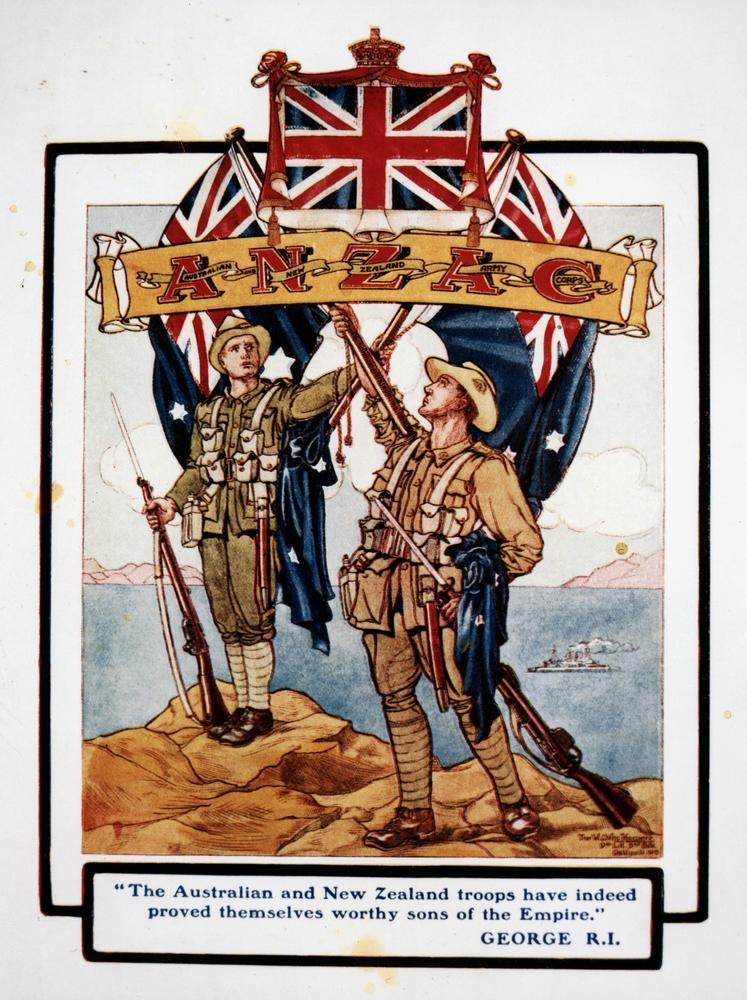
Before battle, there was an intense period of training in the Egyptian desert where one hundred years previously Napoleon had issued a famous proclamation to his troops: “From the top of those pyramids, forty centuries are contemplating you.” Perhaps Kirkpatrick too felt the immensity of the task ahead of him and his comrades. He had read of the German bombardment of Hartlepool, not far from his hometown, and was more determined than ever to do his part. From Egypt, the newly constituted Australia and New Zealand Army Corps (ANZAC) were transported to the Greek island of Lemnos in final preparation for the assault.
Multiple landings were to occur simultaneously, while a French diversion occurred to the south. At the aptly named, Cape Helles, primarily British and Irish forces were to land at beaches codenamed ‘V’ and ‘W’. These troops were to sweep up the beaches and take the higher ground around Achi Baba.
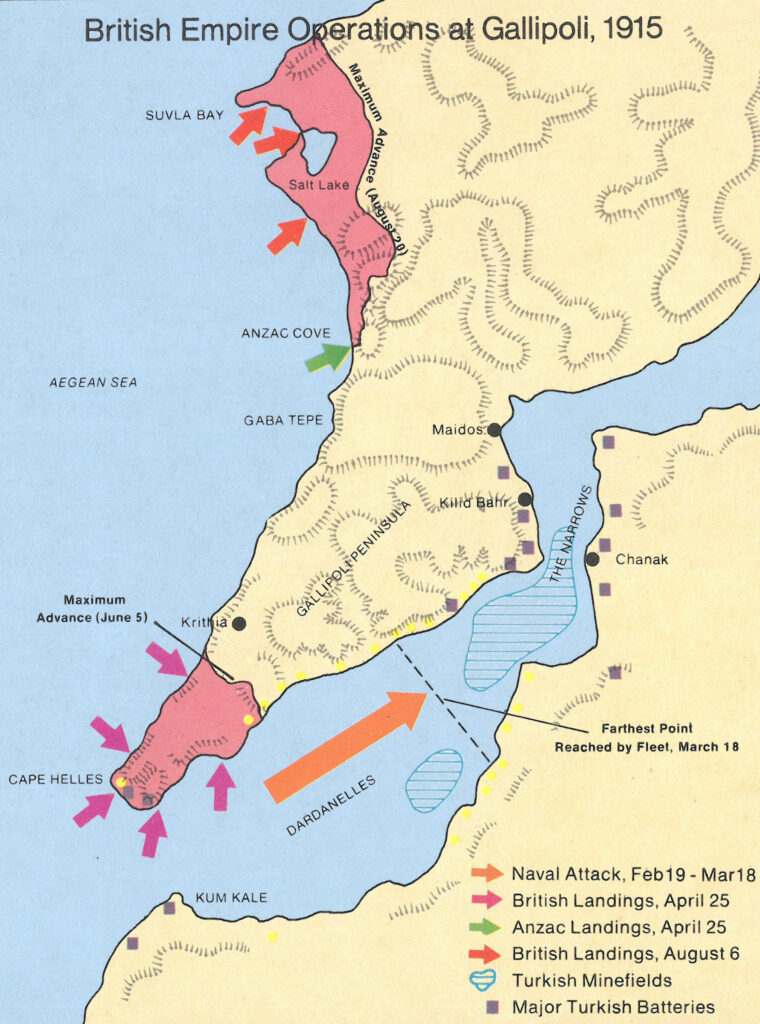
To the north, the 25,000 men of the ANZAC were to land at Gaba Tebe and cross overland to cut off the communication lines of the Turks to the south. In fact, on 25th April, 1915, while the British suffered heavily at Cape Helles, the initial landings of the ANZAC were relatively successful, though in the darkness the troops were dropped about a mile north of their initial target, this was fortuitously in a far less heavily defended sector. The Turks were then twice repulsed and a small foothold was gained.
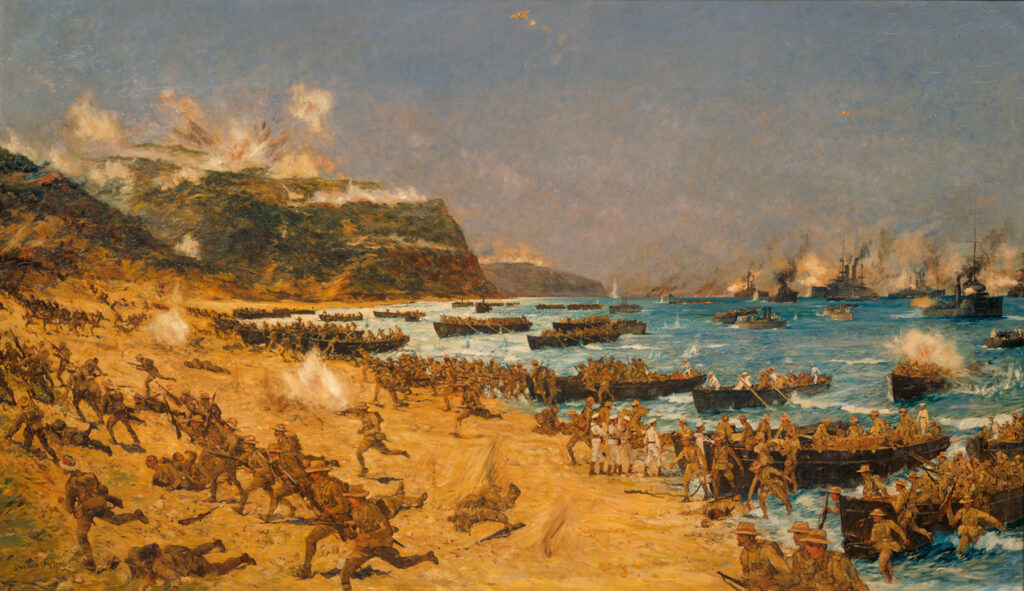
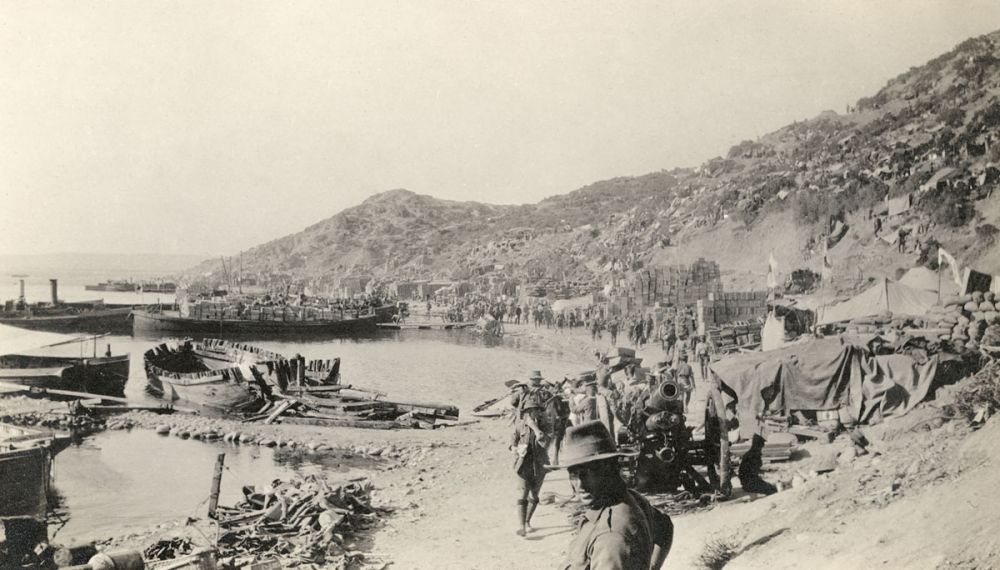
The precarious position left the troops exposed to artillery and machine gun fire, while the frontal assaults attempted by either side were to no avail against these modern, mechanical weapons of war.
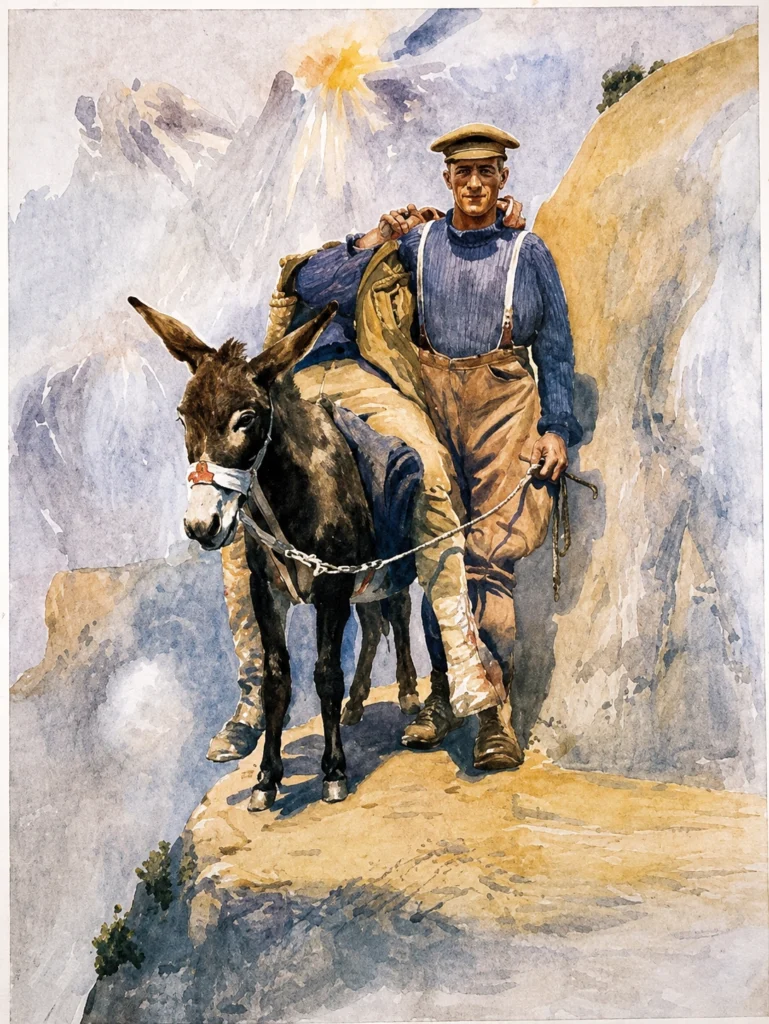
From the off, Jack had his work cut out. He ferried men from the battle, half a mile back through ‘Shrapnel Alley’, across open ground, to the evacuation ships awaiting the wounded. It was slow going, and in the bitter heat, Jack enlisted a valuable mate to lighten the arduous burden.
Murphy the Donkey
He remembered when he had worked alongside donkeys on the beaches of South Shields, as children rode them during the summer holidays in more tranquil times. Kirkpatrick now applied his affinity with these animals to transport these men in need of safety and comfort.
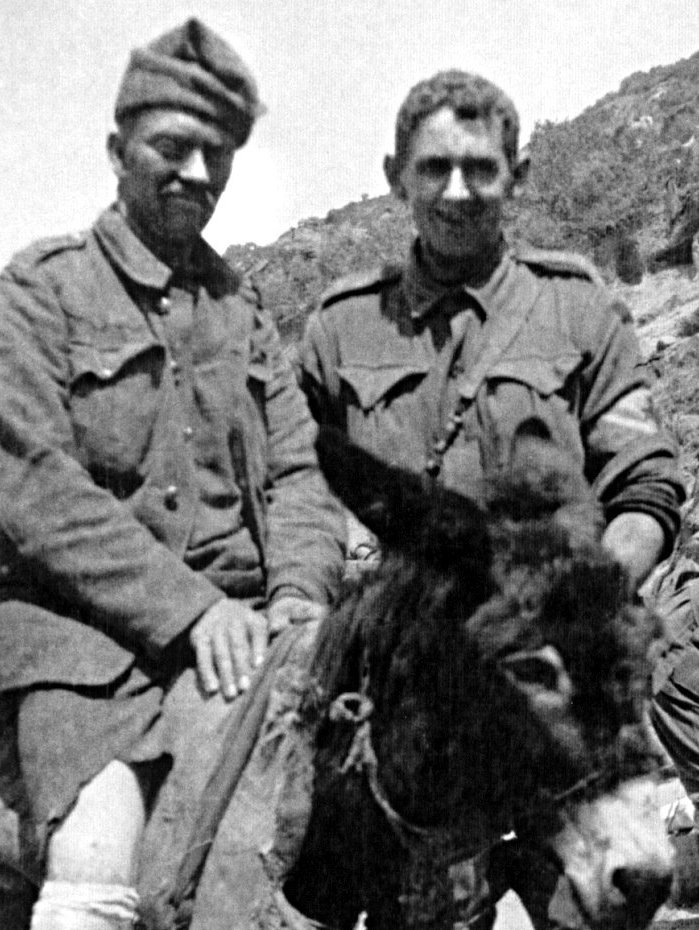
He nicknamed his donkey ‘Murphy’, though there were others including ‘Abdul’, ‘Duffy’ and ‘Queen Elizabeth’, that he worked with in the following weeks in which he unflinchingly undertook his deadly task, constantly in peril for his life.
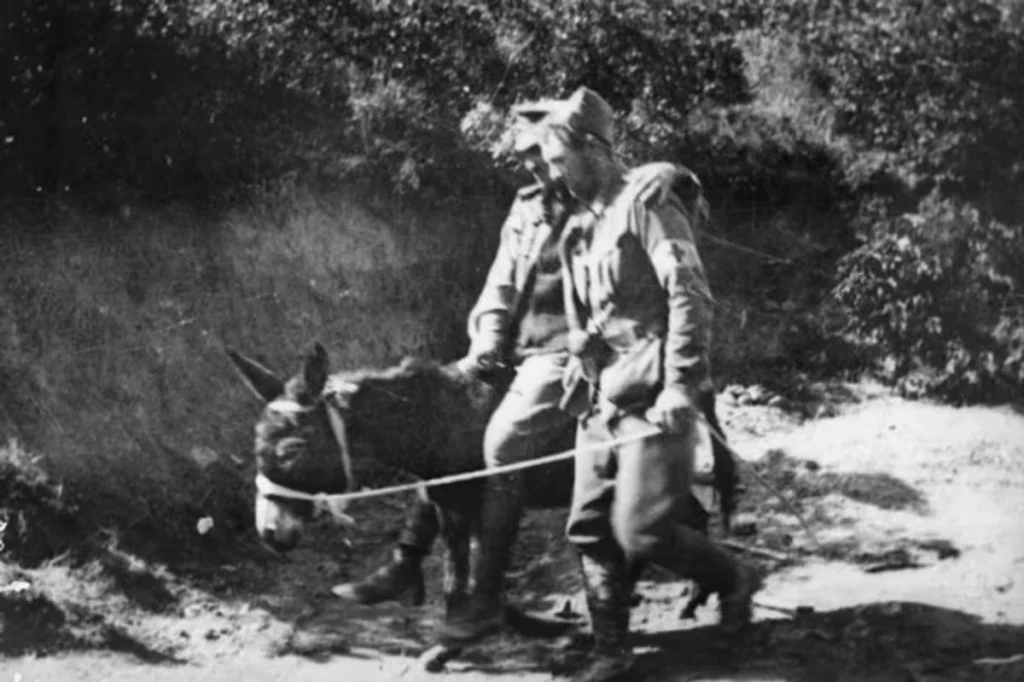
The sight may have offered some momentary comic relief as men cheered ‘Scotty’, mistaking Kirkpatrick’s Geordie accent, as he went along whistling, and at other times no doubt gritting his teeth, during the din of the gunfire that reverberated around him. He was hailed by the Sikh gunners as Bahadur, ‘Bravest of the Brave’.
The descriptions of Kirkpatrick’s efforts remain poignant. Col. John Monash wrote:
“Private Simpson and his little beast earned the admiration of everyone at the upper end of the valley. They worked all day and night throughout the whole period since the landing, and the help rendered to the wounded was invaluable. Simpson knew no fear and moved unconcernedly amid shrapnel and rifle fire, steadily carrying out his self-imposed task day by day, and he frequently earned the applause of the personnel for his many fearless rescues of wounded men from areas subject to rifle and shrapnel fire.”
It is impossible to gauge the precise number of men that Kirkpatrick transported during this period, nor the number that would go on to live, but it is certain that many owed their lives to his courage.
Simpson’s Sacrifice
But tragically, such heroism had a limit. It was unlikely that he could brave so many bullets before one must have his name on it. He was killed on 19th May 1915 during the Ottoman counter-attack, and was buried at ‘Hell Spit’, where his grave remains to this day.
Pvt. Victor Laidlaw, without naming him, recalled:
“Another fatality I found out today – was a private in the 1st (sic.) Field Ambulance, he had been working between the base and the firing line bringing down wounded on a donkey, he had done invaluable service to our cause. One day he was bringing down a man from the trenches and coming down an incline he was shot right through the heart, it is regretted on all sides as this chap was noticed by all, and everybody got to know him, one couldn’t miss him as he used to always work with his donkey, cheerful and willing, this man goes to his death as a soldier!”
In an ironic twist, it was Churchill who most evocatively described the gallantry that Kirkpatrick displayed:
“In equal danger, and with equal courage, saving lives where all others are taking it, allaying pain where all others are causing it, is one which must always seem glorious, whether to God or man. It is impossible to imagine any situation from which a human being might better leave this world and embark upon the hazards of the unknown.”
Still, there was someone to take up his mantle. Richard Alexander Henderson, of the New Zealand Medical Corps would adopt Jack’s method, and even the help of Murphy, to continue the task Kirkpatrick had so tirelessly performed. Henderson would go on to survive the campaign and the entire War, being awarded the Military Medal at the Somme.
Doomed Campaign
Despite Jack’s sacrifice, alongside that of so many others, the Gallipoli campaign was an abject failure, lasting many more fruitless months before an evacuation was finally deemed necessary.
This would turn out to be the most successful operation of the whole campaign. Suffering barely a single casualty, the entire Allied force was able to withdraw from the beaches, masqueraded by ‘drip rifles’ that were pre-timed to fire at certain intervals in order to not draw any Ottoman attention to the now-empty trenches.
Sadly, 508 mules and donkeys were slain before the retreat so as not the fall into enemy hands, amongst which were many of Kirkpatrick’s sturdy comrades.
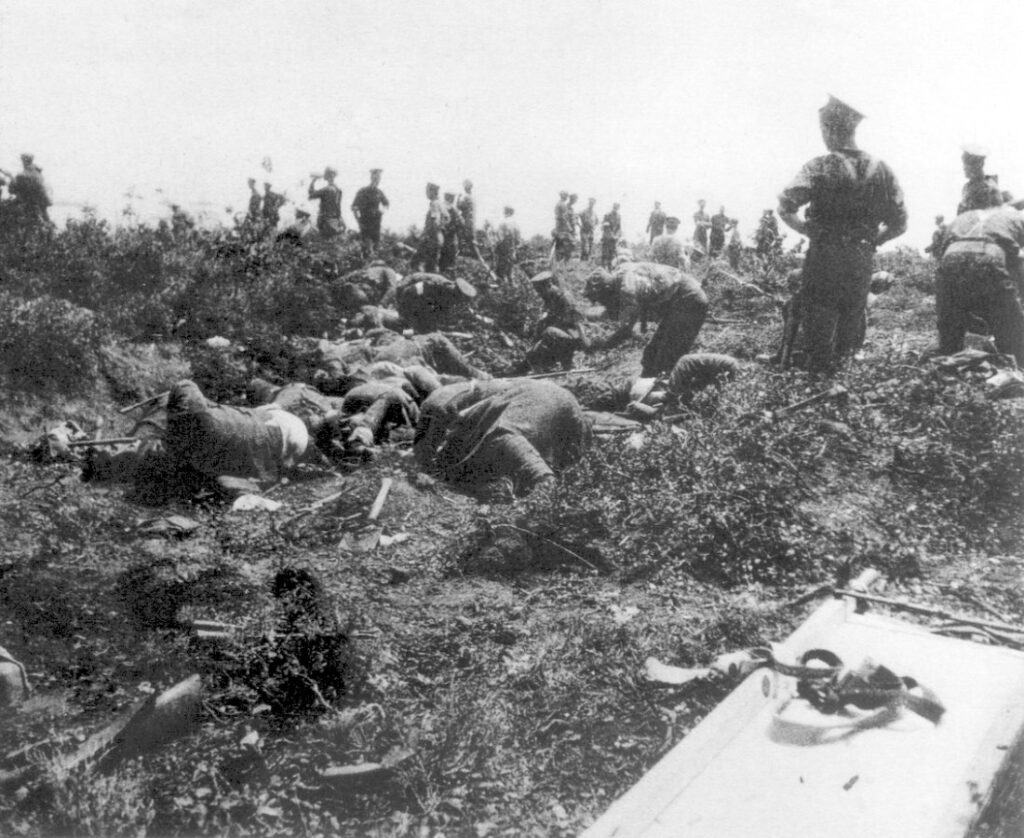
Overall, the dire episode of the Dardanelles must rank not merely as one of the worst fiascos in British military history, but as amongst the most tragic in the long history of humanity. A series of mistakes, laxities and misjudgments resulted in the massacre of thousands of British, Commonwealth and French soldiers without gain, but only to inflict equal devastation on the Ottoman defenders.
Proud Legacy
Most sombre of all, Kirkpatrick’s family back in South Shields were not aware of his death for weeks, and continued to send letters even after the tragedy, praying for the eventual return of their prodigal son who they were never to see again.
But, though he was taken at such a young age, his legacy lives on. Though from South Shields, his name and memory have been heralded as the true spirit of the Australian national character: cocksureness and humour in the face of adversity.
Jack Kirkpatrick, or Simpson, or Murphy — as his name has sometimes been mistakenly conflated with his donkey — was a man who stood in the firing line to help his mates, held together by their common devotion to a burgeoning nation.
To this day, the courage of the ANZAC is commemorated Down Under, and no small part of that commemoration falls upon Kirkpatrick himself, who no doubt became a worthy Australian under the fire of the enemy guns.
How many Australians or New Zealanders now owe their very existence to his courage?
Memory of his Valour
Murphy would belatedly receive the Purple Cross in 1997 for “exceptional work in the saving of human life” by the World Society for the Protection of Animals.
Hailed as a hero on both hemispheres today, statues of Simpson-Kirkpatrick and his donkey can be seen in his hometown of South Shields, at the Australian War Memorial of Canberra and in the Victory Memorial Gardens in Wagga Wagga, New South Wales.
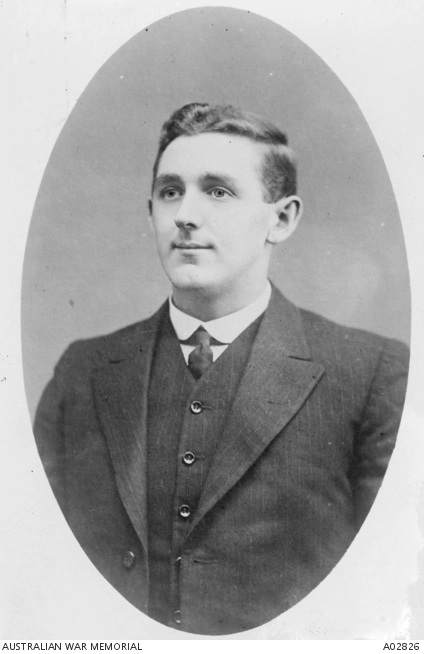
A final letter from his sister on 15th June, 1915, weeks after his death reads:
Dear Jack,
As it was mail day & mother was writing I just thought I would write you a few lines to try & cheer you up. Even if is not very long I know you will appreciate it. How are you keeping? I expect you will be kept very busy tending the wounded as I see by the papers that there is a very heavy casualtty list for the Dardanelles. Oh! if only this terrible war was finished, for it seems dreadful to think that so many fine, healthy young men have to be used as fodder for guns. The brave Australians have lost very heavily too. There are some splendid accounts in the papers of their daring & bravery. Mother & I have sent you a box of 50 Woodbines on chance with this mail, so I hope you get them alright & I needed say I hope for I know you will enjoy them & think of mother & I at home safe while you are just out there in the middle of danger. But you were always of a brave & sturdy nature, so I don’t suppose you ever think of danger. I am registering the parcel to ensure you getting them if not they will be returned back to me. But I do hope you get them. Mother is keeping a bit better just not but of course you are for ever in her thoughts & she can’t be happy. I am keeping fine now, I only wish I knew for certain that you were just as well, Now dear Jack I haven’t any more to say just now, but will write again this week, So with love from mother & myself & praying for you safe return home again.
I remain Your ever loving sister Annie
P.S. We would like a few lines in your handwriting if you could spare the time dear Jack. Goodnight lad & God protect you for you poor old mother’s sake, for Oh Jack! How we do love you. Enclosed you will fine you packet of tabs. I do hope the censor will be kind enough to let you have them. He will if he can I know.